



Elakai Pickleball Rules
Intro
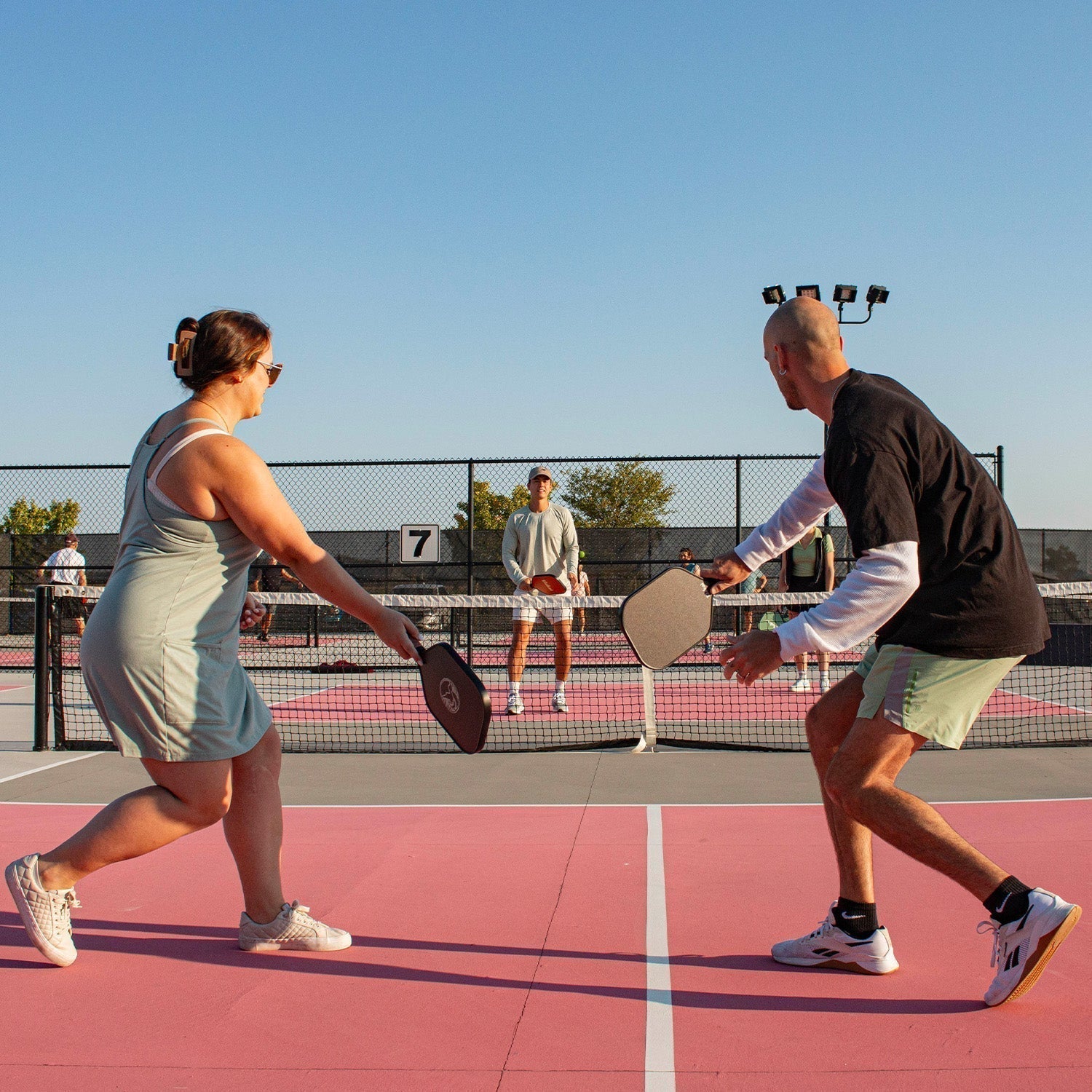
Pickleball is one of the fastest-growing sports in the world — a fun, fast-paced blend of tennis, ping-pong, and badminton. Whether you’re playing casually in the backyard or enjoying a competitive match at the park, Elakai Pickleball brings a stylish, easy-to-learn game to all ages and skill levels.
The Setup
- Gather the equipment:
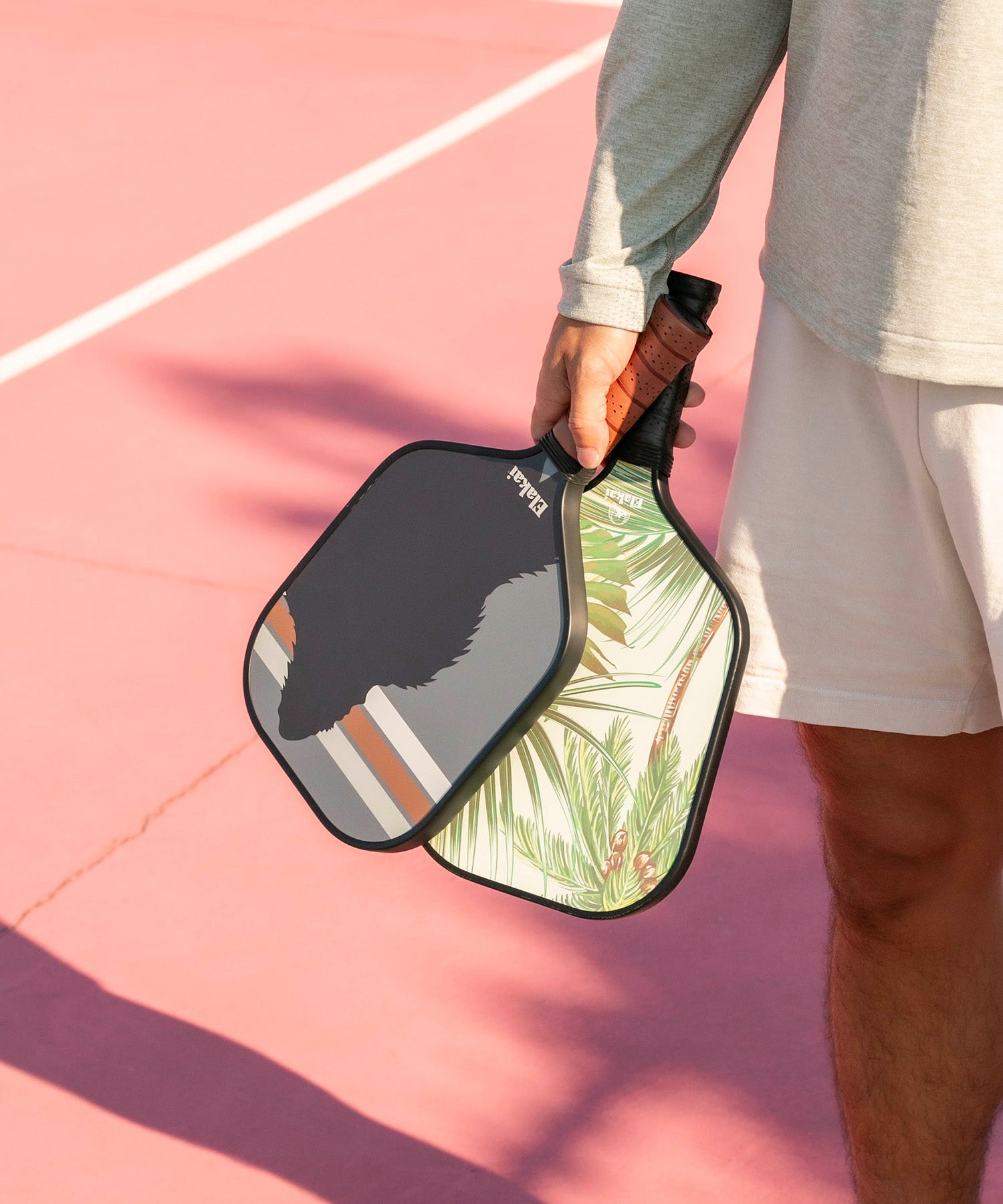
- 2–4 Elakai paddles (depending on singles or doubles)
- 1–2 outdoor pickleballs
- 1 regulation-size net (34” high at the center)
- Chalk, cones, or court markers (if drawing a temporary court)
- Set up a play area. A standard court is 20 ft x 44 ft, but backyard play can be adjusted as needed.
- Mark the sidelines, baselines, centerlines, and kitchen line (the non-volley zone), which is 7 ft from the net on both sides.
- Divide into Singles (1 vs 1) or Doubles (2 vs 2).
- You’re now ready to play Elakai Pickleball!
The Playfield
- The net is 36” high at the posts and 34” high in the center.
- The non-volley zone (“The Kitchen”) extends 7 ft from the net on each side.
- The service courts are divided into right and left rectangles.
Note: A reduced-size court works great for family-friendly or backyard matches.
The Rules
Objective
The goal is simple: rally the ball over the net and win points by forcing your opponent into an error or preventing them from returning the ball.
Serving
- The serve must be hit underhand, with the paddle below the waist.
- The serve must land in the diagonal service court.
- Only one attempt is allowed per serve (let serves are replayed).
- In doubles, the serving team continues serving until they commit a fault. After the first turnover of the game, both partners get a chance to serve each time their team regains the serve.
- The serve must clear the net and the kitchen.
The Double Bounce Rule
After the serve:
- The receiving team must let the ball bounce once before returning it.
- The serving team must also let the return bounce once.
- After these two required bounces, the ball may be played in the air or off the bounce.
The Kitchen (Non-Volley Zone)
- Players may not volley (hit the ball in the air) while standing in the Kitchen.
- Players may step into the Kitchen only to play a ball that bounces there.
- Momentum carries count — if you volley and your momentum takes you into the Kitchen, it is still a fault.
Faults
A fault results in a loss of serve or loss of rally. Common faults include:
- Hitting the ball out of bounds
- Not clearing the net
- Volleys in the Kitchen
- Double hits or carrying the ball
- Stepping into the kitchen during a volley
- Violating the double bounce rule
Scoring
- Points can only be scored by the serving team.
- Games are typically played to 11 and must be won by 2 points.
- Backyard variations: play to 7, 15, or 21 depending on time and number of players.
Singles: The server switches sides only after scoring a point.
Doubles: Partners alternate serving positions as long as they score.
Backyard Variations
Rally Scoring
Every rally earns a point, regardless of who served. Play to 15 or 21 for fast-paced games.
King of the Court
- Winner stays on.
- Challengers rotate in.
- Great for groups of 6–12 players.
Target Zones
- Mark bonus zones on the court with chalk.
- +1 bonus point for landing a ball in the zone.
Winning the Game
The first team to reach the agreed-upon winning score — and lead by 2 — wins the match! Elakai Pickleball can be played casually, competitively, or tournament-style for all ages.